In the heart of every loft apartment, the kitchen often serves as both a culinary hub and a striking design statement. But with their distinctive open layouts and urban charm, loft kitchens present a unique challenge: how to organize essential items like spices without compromising that coveted industrial aesthetic. Enter the industrial style pipe spice rack – a perfect blend of robust form and practical function, designed to complement your loft’s inherent character. This article will guide you through the various types, materials, and considerations for choosing the ideal industrial pipe spice rack, ensuring your spices are as stylishly stored as they are accessible.
The Allure of Industrial Style in Loft Kitchens
Industrial design, at its core, celebrates raw materials, exposed structural elements, and a utilitarian feel. It’s a style that thrives on the beauty of the unfinished, the strength of metal, and the warmth of reclaimed wood. This aesthetic intrinsically aligns with the architectural features often found in lofts: soaring ceilings, exposed brickwork, concrete floors, and visible ductwork. An industrial pipe spice rack isn’t just storage; it’s an extension of this design philosophy, transforming an ordinary kitchen necessity into an eye-catching focal point. Its robust construction and unpretentious materials perfectly echo the loft’s raw, urban soul, adding depth and character to your culinary space.
Popular Types of Industrial Pipe Spice Racks
Industrial pipe spice racks primarily come in a few configurations, each offering distinct advantages depending on your kitchen’s layout and your storage needs.
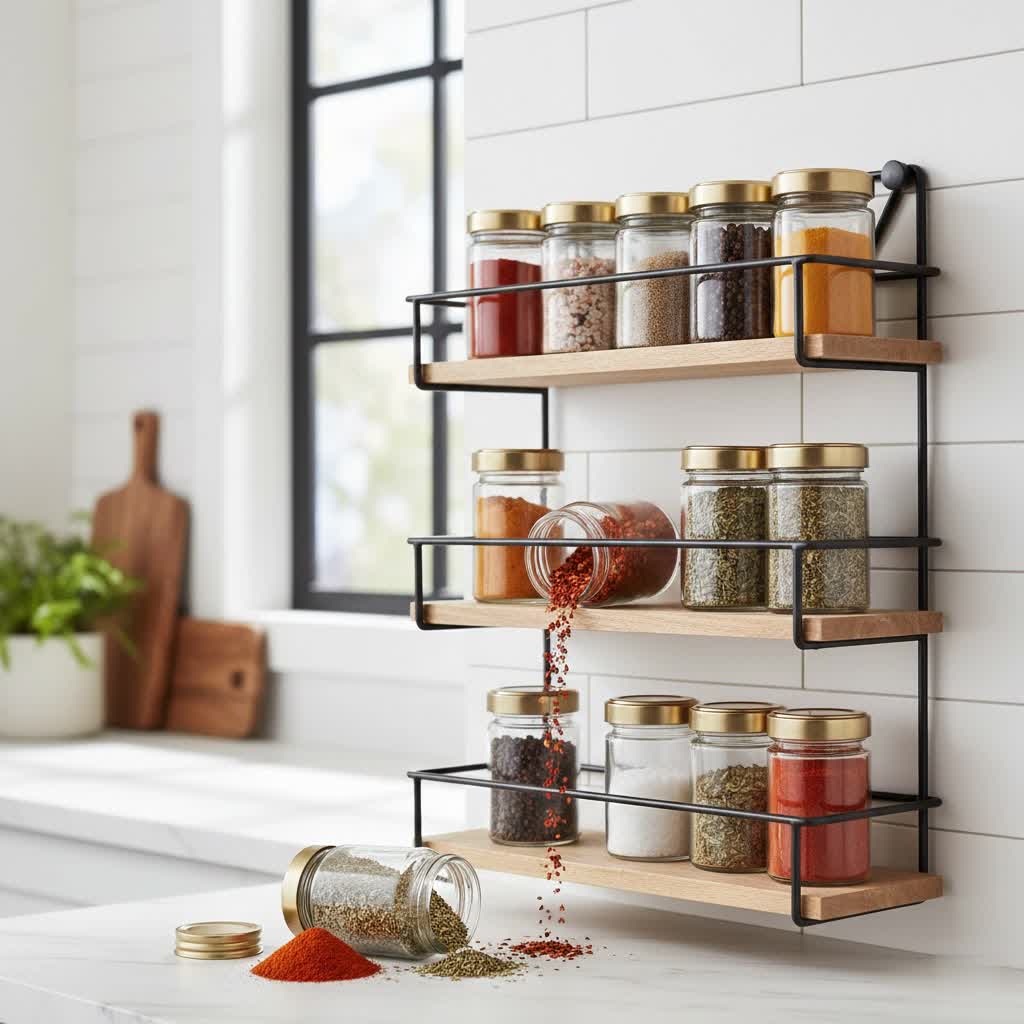
Wall-Mounted Pipe Racks
These are the most iconic and popular choice for industrial-style spice storage in lofts. They utilize the vertical space, freeing up valuable counter and drawer areas.
- Description: Wall-mounted racks typically feature a framework constructed from various pipe fittings (such as nipples, tees, and elbows), which support shelves made of wood, metal, or a combination. The pipes are securely fastened to the wall using flanges.
- Pros: Highly space-saving, customizable in length and number of tiers, creates a strong visual statement, and often becomes a key design element in the kitchen.
- Cons: Requires drilling for installation, is a permanent fixture, and repositioning can be challenging.
|
Our Picks for the Best Spice rack in 2026
As an Amazon Associate I earn from qualifying purchases.
|
||
| Num | Product | Action |
|---|---|---|
| 1 | Kamenstein 20 Jar Revolving Countertop Spice Rack with Spices Included, FREE Spice Refills for 5 Years, Polished Stainless Steel with Black Caps, 30020 |

|
| 2 | Bunoxea Spice Rack Wall Mounted 4 Pack,Space-Saving Spice Organizer for Spice Jars and Seasonings,Screw or Adhesive Hanging Spice Rack Organizer for Your Kitchen Cabinet,Pantry Door,11.41x2.75x2.75in |
|
| 3 | LYNK PROFESSIONAL® Pull Out Spice Organization for Cabinets - 4-3/8 inch Wide – Spice Rack for Inside Cabinets, Slide Out Spice Rack Organizer for cabinet – Pull Out Spice Rack, Sliding 2 Tier Chrome |
|
| 4 | Sevenblue 4 Pack Strong Magnetic Spice Rack for Refrigerator, Multipurpose Magnetic Shelf for Fridge with 4 Hooks for Kitchen and Bathroom Organization, Black |
|
| 5 | LAMU 2 Tier Lazy Susan Turntable Organizer 9.25'' Rotating Spice Rack Organization for Cabinet, Kitchen, Pantry, Countertop, Bathroom, Vanity, Medicine Cabinet Organizer, Clear |
|
| 6 | Orii 20 Jar Rotating Spice Rack with Spices Included & 5-Year Free Spice Refill Program – Stainless Steel Countertop Spice Rack with 3 oz Glass Jars |
|
| 7 | SpaceAid Bamboo Pull Out Spice Rack Organizer for Cabinet, Heavy Duty Slide Out Seasoning Kitchen Pantry Sliding Vertical Organization, 7.6" Wide, 3 Drawers(2" Wide), 2-Tier, Natural |
|
| 8 | Pull Out Spice Rack Organizer for Cabinet, 3 Packs Slide Out Spice Racks Organizer, Spice Cabinet Organizers, Cabinet Size Need:12'' Highx11'' Deepx5'' Wide,Each Tier Hold 10 Spice Jar - 2 Tier, Black |
|
| 9 | Spice Rack Kitchen Cabinet Organizer- 3 Tier Bamboo Expandable Display Shelf Yellow |
|
| 10 | Copco Non-Skid 3-Tier Spice Rack Organizer for Cabinet - 10 Inch Kitchen Pantry Organizer with Raised Rims, White and Gray Step Shelf for Spices, Cans, Jars - Easy Clean Storage Solution |
|
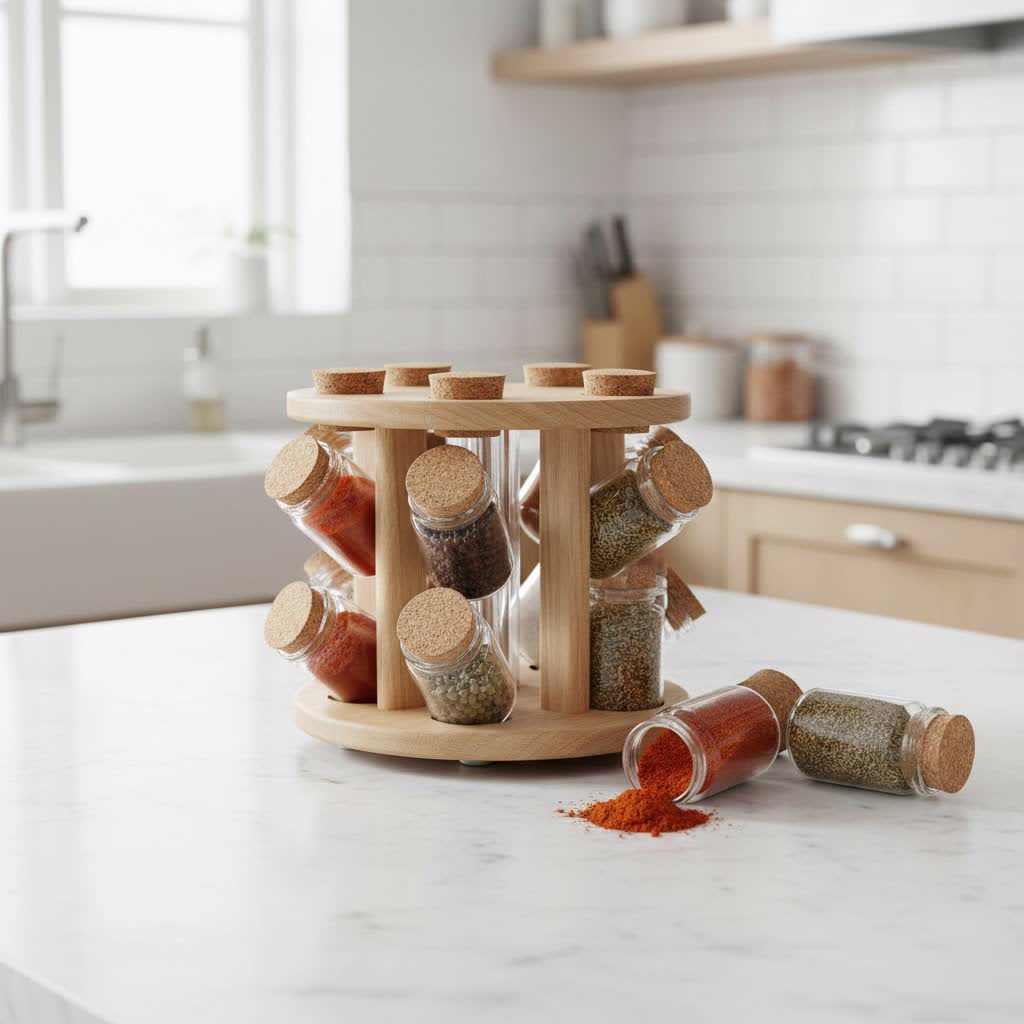
Freestanding/Countertop Pipe Racks
For those with ample counter space or who prefer flexibility, smaller freestanding units offer an attractive alternative.
- Description: These are compact, self-supporting spice racks made from pipes and often incorporating a wooden base or small shelves.
- Pros: Requires no installation, can be easily moved, perfect for renters or those who frequently rearrange their kitchen.
- Cons: Takes up valuable counter space, capacity is generally more limited compared to wall-mounted options.
While other spice storage solutions exist, such as drawer organizers or cabinet inserts, they typically don’t embody the exposed pipe aesthetic crucial to the industrial style and loft environment. For a truly authentic industrial look, focusing on wall-mounted or freestanding pipe designs is key.
Comparing Materials: Pipes and Shelves
The materials chosen for your industrial pipe spice rack are paramount, influencing both its aesthetic and durability.
Pipes
- Black Iron Pipe: This is the quintessential choice for a raw, authentic industrial look.
- Pros: Exceptionally sturdy, robust, and readily available. Its dark, matte finish provides a strong visual impact.
- Cons: Can be heavy and prone to rust if not properly sealed or maintained, especially in humid kitchen environments.
- Copper Pipe: Offers a warmer, more refined industrial feel.
- Pros: Lighter than iron, develops a beautiful patina over time, and adds a touch of rustic elegance.
- Cons: Generally more expensive than black iron. While screw-together fittings exist, some complex designs might traditionally involve soldering.
- Galvanized Pipe: Characterized by its zinc coating.
- Pros: Excellent rust resistance due to the galvanization process, offering a silver-grey finish.
- Cons: Can appear shinier and less “raw” or “gritty” than black iron, which some might find less fitting for a true industrial aesthetic.
- Brass Pipe: The premium option for a luxurious industrial statement.
- Pros: Delivers an elegant, sophisticated golden sheen, highly durable, and resistant to corrosion.
- Cons: The most expensive material choice for pipe fittings.
Shelves
The shelves are where your spices will rest, and their material significantly contributes to the rack’s overall look.
- Reclaimed Wood: A popular choice for its unique character and sustainable appeal.
- Pros: Each piece is unique, telling a story with its grain, knots, and imperfections. It adds warmth and an authentic vintage industrial touch.
- Cons: Sourcing can be challenging, and it often requires significant preparation (sanding, cleaning, sealing) to ensure it’s food-safe and durable.
- Solid Hardwood (e.g., Oak, Walnut, Acacia): Provides a clean, high-quality finish.
- Pros: Extremely durable, offers a wide range of natural colors and grain patterns, and can be stained to match any decor.
- Cons: Can be more expensive than other wood types.
- Metal (Sheet Metal, Wire Mesh): For an ultra-modern, stark industrial edge.
- Pros: Exceptionally durable, very easy to clean, and provides a sleek, minimalist industrial look.
- Cons: Can scratch more easily than wood, and some might find it lacks the warmth and texture that wood provides.
Table: Comparison of Industrial Pipe Spice Rack Features
| Feature | Wall-Mounted Pipe Rack | Freestanding Pipe Rack |
|---|---|---|
| Installation | Permanent (drilling) | None |
| Capacity | High (multi-tier) | Limited |
| Space Usage | Vertical (saves counter) | Countertop |
| Aesthetic Impact | Major focal point | Accent piece |
| Customization | High | Moderate |
| Cost | Moderate to High | Low to Moderate |
| Portability | Low | High |
Choosing the Best Industrial Pipe Spice Rack for Your Loft
Selecting the perfect industrial pipe spice rack involves a thoughtful assessment of your specific needs and the unique characteristics of your loft kitchen.
- Assess Your Space: First, determine whether you have more available wall space or counter space. Wall-mounted racks are ideal for maximizing vertical storage and keeping counters clear, which is often crucial in smaller loft kitchens. Freestanding options are better for those with ample counter area or a desire for flexible placement.
- Consider Capacity: How many spices do you have, and how many do you anticipate collecting? Industrial pipe racks can range from small, single-shelf units to expansive multi-tiered systems. Plan for current needs and a little room for growth.
- Match Your Loft’s Vibe: The beauty of industrial design lies in its versatility. For a raw, edgy aesthetic, black iron pipes paired with dark or reclaimed wood are perfect. If you prefer a more refined or “steampunk” industrial feel, consider copper or brass pipes with lighter wood tones.
- Budget: Your budget will influence whether you opt for a DIY project or a pre-made solution, as well as the materials you can choose. Copper and brass pipes are typically more expensive than black iron, and exotic hardwoods will cost more than reclaimed pine.
- Installation Ease: If you’re comfortable with DIY projects, assembling and installing a pipe rack can be a rewarding endeavor. If drilling into walls and handling heavy components isn’t your forte, a professionally made and installed unit or a simple freestanding rack might be a better choice.
- Durability and Maintenance: Consider the longevity of the materials. While metal pipes are inherently durable, black iron may require periodic sealing to prevent rust. Wood shelves will need to be wiped clean regularly and potentially re-sealed over time to maintain their finish.
DIY vs. Buying Pre-Made: Which is Right for You?
The decision to build your own industrial pipe spice rack or purchase a pre-made one depends on your skills, time, and desire for customization.
DIY (Do-It-Yourself) Industrial Pipe Spice Racks:
- Pros: This option offers unparalleled customization, allowing you to tailor every dimension, material, and finish to your exact specifications. It can also be more cost-effective, especially if you source reclaimed materials, and provides immense satisfaction from creating something with your own hands.
- Cons: Requires tools, basic woodworking, and plumbing assembly skills. It can be time-consuming, and potential for errors exists if you’re not experienced.
Buying Pre-Made Industrial Pipe Spice Racks:
- Pros: Offers convenience, a professional finish, and often comes with guaranteed quality. There’s a vast array of designs available, from minimalist to elaborate, saving you time and effort. Many artisans offer customization options for dimensions and finishes.
- Cons: Generally comes with a higher price tag compared to a DIY project, and customization might be limited to available options rather than full creative freedom.
Where to Find Industrial Style Pipe Spice Racks
Whether you’re looking to embark on a DIY project or purchase a ready-made solution, resources are plentiful.
- Online Marketplaces: Websites like Etsy, Amazon, and Wayfair are excellent places to start. Search for terms like “industrial pipe shelving,” “loft spice rack,” or “reclaimed wood pipe shelves.” You’ll find a wide range of options from independent artisans and larger retailers.
- Specialty Home Decor Stores: Boutiques focusing on industrial, rustic, or vintage decor often carry unique pipe shelving units that can be adapted for spices.
- Local Artisans: Many local craftsmen specialize in custom industrial furniture. Websites like Pipeworkpieces.com, for instance, offer customizable wall-mounted pipe spice racks with various pipe lengths and stain colors.
- Hardware Stores/Salvage Yards (for DIY): For the DIY enthusiast, your local hardware store is the source for black iron, copper, or galvanized pipes and fittings. Salvage yards are treasure troves for unique reclaimed wood planks or vintage industrial components.
Installation Tips for Wall-Mounted Racks
Proper installation is crucial for the safety and stability of your wall-mounted industrial pipe spice rack.
- Gather Your Tools: You’ll need a drill, level, stud finder, measuring tape, and appropriate screws and anchors.
- Locate Studs: For maximum stability, always try to mount your rack directly into wall studs. Use a stud finder to locate them accurately.
- Use Heavy-Duty Anchors: If studs aren’t available at your desired location, use high-quality drywall anchors rated for the weight of your rack plus fully loaded spice jars.
- Measure Carefully: Mark your screw holes precisely, ensuring the rack will be perfectly level. A slight misalignment can detract from the aesthetic and compromise stability.
- Secure Firmly: Tighten all pipe fittings and mounting screws. Periodically check them to ensure they remain snug.
“Ensuring your wall-mounted rack is securely anchored into wall studs is paramount for both safety and longevity, especially with the weight of full spice jars.” – Admin, reviewbcg.com, Kitchen Storage Solutions Specialist
Organizing and Styling Your Loft Spice Rack
Once your industrial pipe spice rack is installed, a thoughtful approach to organizing and styling will enhance its functionality and visual appeal.
- Uniform Jars: Investing in a set of uniform spice jars creates a cohesive and visually appealing display, reinforcing the minimalist aspect of industrial design.
- Clear Labeling: Labeling is essential for easy identification. Consider chalkboard labels, minimalist print labels, or embossed labels that complement the industrial aesthetic.
- Arrangement: Organize your spices in a way that makes sense to you. This could be alphabetically, by cuisine, by frequency of use, or even by color for a vibrant display.
- Decorative Elements: While functionality is key, don’t shy away from adding small decorative touches. A small potted herb, a miniature industrial-themed figurine, or a small piece of complementary artwork can soften the raw edge and add personality.
Care and Maintenance
To ensure your industrial pipe spice rack remains a functional and attractive feature in your loft kitchen for years to come, regular care is essential.
- Pipes: For black iron pipes, regularly wipe them down with a dry or slightly damp cloth. If you notice any signs of rust, address them promptly with a wire brush and consider applying a clear sealant or wax. Copper and brass can be polished to maintain their shine or allowed to naturally patina for an aged look.
- Wood Shelves: Wipe wooden shelves clean with a damp cloth, avoiding excessive moisture. For deeper cleaning, use a wood-safe cleaner. Depending on the finish, you might need to re-oil or re-seal the wood periodically to protect it from moisture and wear.
- General Check: Periodically inspect all pipe fittings and mounting screws to ensure they remain tight and secure. This is especially important for wall-mounted units supporting heavy spice collections.
Buying Guide
When making your final decision, consider these key factors:
- Budget: Determine your spending limit to narrow down options between DIY and pre-made, and material choices.
- Materials: Choose pipe material (black iron, copper, galvanized, brass) and shelf material (reclaimed wood, solid hardwood, metal) based on desired aesthetic, durability, and maintenance.
- Dimensions and Capacity: Measure your available space precisely and consider how many spice jars you need to store now and in the future.
- Installation Method: Decide if you prefer a permanent wall-mounted solution or a flexible freestanding one.
- Overall Style: Ensure the rack’s design, from its lines to its finishes, complements the existing industrial charm of your loft kitchen.
Conclusion
The industrial style pipe spice rack offers the perfect marriage of rugged aesthetics and practical organization for any loft kitchen. Whether you opt for a hands-on DIY project or a meticulously crafted pre-made piece, choosing the right combination of pipe and shelf materials, and a thoughtful approach to installation and styling, will transform a simple storage unit into a defining element of your home. It’s an opportunity to embrace the exposed, functional beauty of industrial design while keeping your essential spices neatly within reach.
What industrial elements define your dream loft kitchen, and how will your new spice rack enhance them?
Frequently Asked Questions
Can industrial pipe spice racks be customized for small kitchens?
Absolutely. Many designs can be customized in length, height, and number of tiers, making them highly adaptable for even the most compact loft kitchens. Wall-mounted versions are particularly excellent for maximizing vertical space without cluttering precious countertops.
What are the best materials for a durable industrial spice rack?
For durability, black iron or galvanized steel pipes are excellent choices due to their strength. For shelves, solid hardwoods like oak or acacia, or even metal, offer superior longevity compared to particle board or veneer. Proper sealing and maintenance are key to extending the life of any material.
How do I prevent rust on black iron pipe spice racks?
To prevent rust on black iron pipes, it’s crucial to clean and then seal them. A common method is to wipe the pipes thoroughly to remove any residue, then apply a protective clear coat, such as a polyurethane spray, a wax, or a matte clear sealant designed for metal. This creates a barrier against moisture.
Are these racks easy to install for a DIY beginner?
While assembling the pipe fittings can be straightforward, installing a wall-mounted industrial spice rack requires some basic DIY skills, including using a drill, a level, and a stud finder. If you’re new to DIY, start with a simpler, smaller design or consider a freestanding option.
Where can I find unique industrial pipe fittings?
Beyond standard hardware stores, unique industrial pipe fittings can often be found at architectural salvage yards, antique shops, or online marketplaces like Etsy, which feature sellers specializing in vintage or custom pipe components. These sources can provide unique pieces to give your rack distinctive character.